
Institutional Heritage of M.V. College
Buxar owns its importance as a historical place almost exclusively to its colossal Vishvamitra Ashram, which still stands majestically. The traditional account of the holy antiquity as an important center of Vishnu and Shiva worship embedded in Valmiki’s Ramayana, Ramcharitmanas, and Puranas has been described. This town, known as Siddhashram, witnessed a remarkable outburst of intellectual activities during the time of Maharshi Vishwamitra in the Vedic period.
The new spirit of the modern age was remarkably illustrated by the life and thought of Sri Khakhi Baba (The Saketbasi) and Sri Mauni Baba (Janakpurbasi). Undoubtedly, Khakhi Baba was a great social reformer, a great religious teacher, and a tower of philosophical wisdom in this area. He himself worked tirelessly for reform in the educational field. Deeply religious but not theologically rigid, he laid great emphasis on modern education, including co-education. For this noble purpose, he laid the foundation of Maharshi Vishwamitra Mahavidyalaya, Buxar on 11th June, 1958.
The honourable Raja of Dumraon State had deep love and affection for Khakhi Baba. He donated ten bighas of prime land on the bank of the Holy Ganga for the college. Along with the Raja of Dumraon, other devoted disciples of Khakhi Baba gave monetary help for the construction of the building of the college. Sri Basistha Narayan Mishra, the elder son of Khakhi Baba, devoted his entire life for the institution until it became a Constituent Unit under Magadh University in the year 1975 (and subsequently under Veer Kunwar Singh University, Ara).
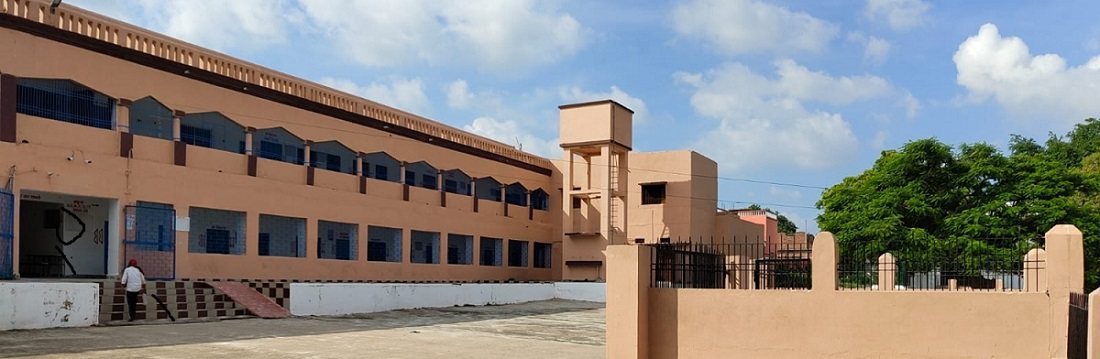
The college has been designed skillfully. The classrooms are many in number, varying in size from classic lecture rooms to palatial halls. Harmoniously integrated with the collegiate campus stand the sacred Ram Lakshman Janki Temple and the revered Kaldhatri (Gaiya Maiya) Mandir, reflecting ancient architectural and spiritual traditions.
In the first stage of the opening of the college in 1958, teachings of the Social Sciences & Humanities were started. The opening of the Science Faculty in 1967 fulfilled a critical academic need for the region, with credit largely attributed to then Principal Dr. Jitram Pathak. The college actively promotes student development through N.S.S. camping, N.C.C. training, debating societies, annual sports, well-equipped laboratories, and an automated central library.